Southern Legitimacy Statement: The story I am submitting, I Can Still Hear the Music, is about my Southern Belle mother who, in her mid-twenties, moved to New York City with my father at the end of the Depression. She wanted to be my father’s one and only, but he had eyes for others. The story is her memory of a visit to Luxor, Egypt, when she danced with a young handsome Southern man in the beautiful gardens of The Winter Palace Hotel, wondering if she should have stayed in the South to live the life of a Belle.
I Can Still Hear the Music
In 1963 Mother and I were in Egypt, on our way from Cairo to Luxor. It was only early spring, but inside our hot, unairconditioned car the air was muggy, almost sickening. With one arm hanging out the wide-open window, the guide/driver, while uttering occasional moans, used his other hand to mop his brow.
Halfway through our trip Mother began a story that seemed to come out of nowhere, but as she recounted her memory, I slipped into the scene she described.
“In 1932, when I was twenty-five, mymother and I, with several Southern friends, traveled on a cruise in the Mediterranean. Oh, yes, I was married then to your father —probably a good three years. We hadn’t lived in New York for long, but Mother wasn’t well and she asked me to take this cruise with her. Thank heavens I did, as she died soon after. We had spent a week in Cairo before taking the train to Luxor to stay at the Winter Palace Hotel. Oh, Joanie, I so looked forward to it—we all did. I’d heard about the hotel’s exquisite garden and we just couldn’t wait to dance that night under the stars. You can’t beat Egypt for the exotic, the intrigue— just what we all thrilled to.” She sighed.
“And now I’m so anxious to show you that garden. I remember it was full of the scent of jasmine, and oh, the band—they played such dreamy tunes, As Time Goes By and Night and Day.”Mother hummed the tunes as she lifted herarms in a dancing sway, her head back on the seat. “Just beautiful—every moment of that night so long ago. I can still hear the music.”
Mother quietly added, almost in a whisper, that there had been a handsome man on the cruise ship, a Southerner she hadn’t previously known but with whom she danced that night to the magical tunes.
“He was such a good dancer. He twirled me, slowly, beautifully . . . like your father does, only—and I know I shouldn’t say this—even better.” She smiled at the picture in her head. I looked at her and imagined the charming man holding her in a tight dance embrace. I also imagined those other young women and men crossing the dance floor, full of held-in desire, which was correct behavior for the time.
“I know I looked pretty; I’d had my portrait done in black crayon at Shepheard’s Hotel in Cairo,” she said, as she looked out the car window at the Nile’s fertile fields. “I had a new haircut—the short style of the times. I love that portrait. You know the one, Joanie, it’s in our bedroom.”
Mother, in her mid-fifties and I almost twenty, we drove to Luxor that day, some thirty years after the Nile cruise when she danced with the special man, not just any Southern man, she pointed out, but a tall and slender one whose eye she had caught on the ship. His reddish-blond hair, parted high up on the side, and his white linen pants and blue blazer, not the seersucker suit that many Southern men would have worn, gave him an sophisticated look.
And it was not just any night that she remembered, but a compelling one that had lingered in her heart with a confused yearning; a Southern belle who longed to fit into Yankee New York City life, and most importantly to be the one and only for her husband.
She did fit into New York, in her own way, and she loved the city with an intensity. Charmed by my father’s boyish ways, his good looks, his joy and humor, she felt positive about their future. Plus she admired his determination to make it in New York after his father lost everything in the Depression. It was not at the beginning of their marriage, but soon after, that the loneliness began, which started with a deep wish for her husband’s singular love—for she was not quite his only one. Father was not a bad philanderer yet—as if you can be a good or bad one—but his wandering eye and flirting hurt her. I had often witnessed moments of his quiet betrayal.
“And can you imagine, Joanie, as I danced with this handsome man, he told me in such a quiet way that he wished he’d known me earlier, before I had married. Born in a North Carolina town near my own, he lived there still. He whispered that together we could have captured the South, that my charm and curiosity would have transformed a community like his. He stared at me with those lovely eyes, but I didn’t answer, I just couldn’t.
“But for a minute, just a moment, he made me miss the loveliness, that small-town loveliness of the South. I told him to stop—I really did, Joanie—but maybe it was the heat, the music, the gin and tonic . . . .it was so confusing.”
Finally our car pulled up to the hotel’s front door, and two bellmen came out to take our luggage.
“Oh, thank heavens, we’re here,” Mother said over her shoulder to me and the driver. “Come on, we’ll leave our bags in the lobby and go to the garden.”
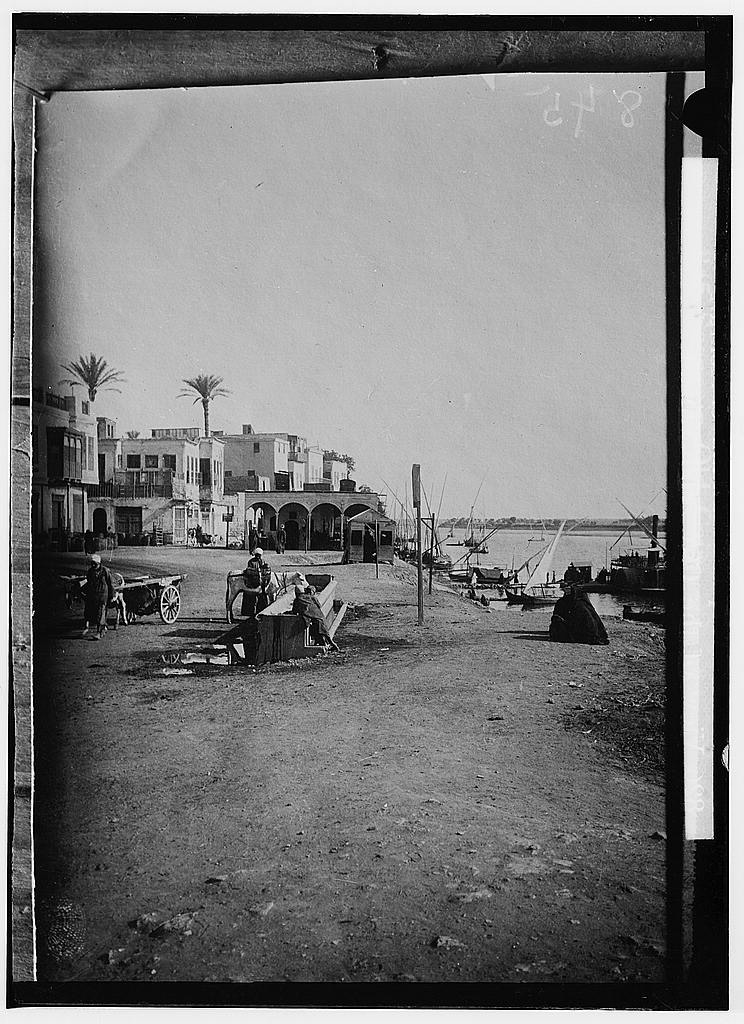
We walked hurriedly through the hotel’s slightly rundown but still charming lobby toward the glass doors leading to the garden. Through the glare of the afternoon sun we spied its dilapidated green gates fifty yards ahead. I glanced at Mother’s face and saw the beginning of disappointment, her anticipation turning into a despairing sadness: the garden, now overgrown with weeds, the location where the band once might have performed revealed an overturned chair lying under tree branches that had fallen across the once-enticing dance floor. But the scent of jasmine still hung in the air, the meanness of it mocking her memory.
The four o’clock heat seemed to intensify. We both wore thin dresses and wide-brimmed hats. On my feet were sandals, while Mother wore the always-correct, high-heeled shoes and stockings that displayed her Southern gentility. We stood in the garden for several minutes, neither of us speaking, but a sense of melancholy enveloped us. Mother quietly walked to a discarded chair and set it upright. She looked at the broken remnants of the dance platform and put her hand to her forehead. I stood back, wishing something good would happen to break the spell. She pulled out the ever-present handkerchief from her cotton sleeve to dab at her face, damp with the heat. She didn’t cry, but I felt her body’s sad weariness in the thick air.
After a while Mother stood up straight, turned to me with an attempt at a smile, and stammered, “We must go find a breeze somewhere. It is so terribly hot. I believe I saw the Nile’s felucca boats waiting in front of the hotel. Let’s hire one and sail for an hour or so up the river.”
“Yes, what a good thought,” I answered, with the hope she could escape this crushing scene.
The boatman had let out the felucca’s two sails to catch the breeze. After a while, the evening turned a bit cooler, while still holding a heaviness. I stole occasional glances at Mother, who seemed to be oblivious to the river’s spray. She sat silently staring at the water, her hands in her lap, her fingers entwined around the waiting fan inscribed with the name, The Winter Palace Hotel.